
You had a root canal months or years ago. The discomfort went away, your tooth was restored, and you stopped thinking about it. Now, unexpectedly, something feels wrong again.
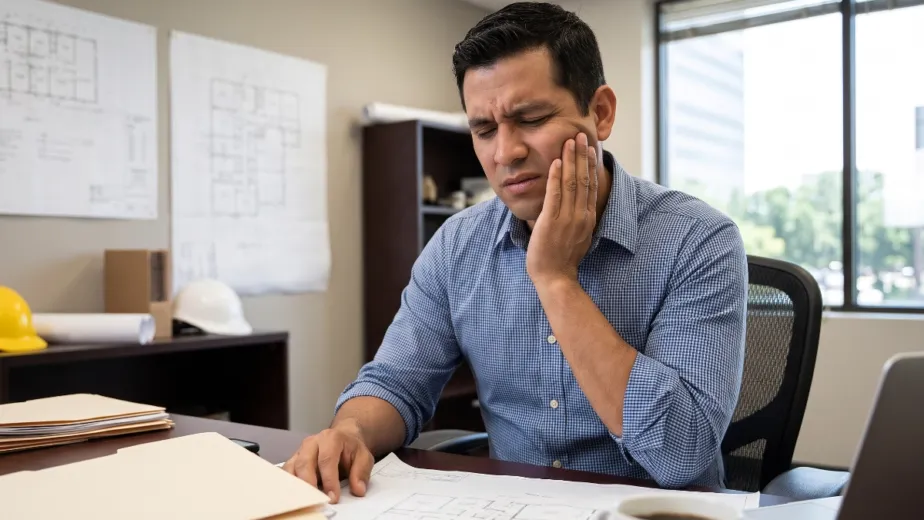
Maybe the tooth is tender when you chew. Perhaps you have noticed swelling around the gum, or your dentist has identified a persistent area of inflammation on an X-ray.
It is natural to wonder whether the original treatment failed and whether losing the tooth is inevitable.
The encouraging news is that a tooth with a previous root canal can sometimes be treated again. Endodontic retreatment may offer another opportunity to address infection and preserve the natural tooth.
Why Would a Root Canal Need to Be Repeated?
Root canal treatment is designed to remove inflamed or infected tissue from inside a tooth, clean the canal system, and seal it against future contamination.
Many treated teeth continue functioning successfully for years. However, healing is not guaranteed, and problems can develop after the original procedure.
Several situations may explain why additional treatment becomes necessary.
Previously Undetected Root Canals
The internal anatomy of a tooth can be surprisingly complicated. Some teeth contain very narrow, curved, or additional canals that are difficult to locate.
If an area of the root canal system was not adequately treated during the initial procedure, bacteria may remain and contribute to persistent infection.
New Decay or a Damaged Restoration
Even after successful root canal treatment, a tooth remains vulnerable to new cavities, cracks, and damage to existing restorations.
If the seal protecting the tooth breaks down, bacteria may gain access to the previously treated canal system.
Delayed Permanent Restoration
A tooth often needs a permanent restoration following root canal therapy to protect it and restore normal function.
A delay in completing that restoration may increase the risk of contamination or structural complications.
Complex Anatomy or Persistent Infection
Some root canal systems contain anatomical variations that make treatment especially challenging.
A previously treated tooth may also develop a new problem because of trauma, a fracture, or changes in the surrounding tissues.
An accurate diagnosis is essential before deciding whether retreatment is appropriate.
What Are the Signs of a Failed Root Canal?
A previously treated tooth that develops problems may cause:
- Pain or tenderness when biting.
- Persistent discomfort around the tooth.
- Swelling or a small bump on the gums.
- A recurring infection or drainage.
- Changes identified on dental radiographs.
- Sensitivity or discomfort in the surrounding area.
However, an important point is often overlooked: a tooth with persistent disease may have no obvious symptoms.
Your general dentist may discover a concern during a routine examination or imaging appointment.
Likewise, discomfort after a root canal does not automatically mean treatment failure. The cause may involve healing, bite-related problems, surrounding tissues, or another dental condition.
How Does Endodontic Retreatment Work?
The first step is diagnosis. A CBCT three-dimensional image will be taken to provide information about root anatomy, surrounding bone, and potential sources of persistent disease. Our practice offers the most modern equipment to aid this process.
Endodontic retreatment involves reopening a tooth that has previously undergone root canal treatment. After evaluating the existing restoration and gaining access to the canal system, the endodontist removes previous root canal filling materials.
The internal anatomy is then examined for untreated canals, sources of contamination, or other problems that may explain the symptoms or persistent infection.
When retreatment is feasible, the canals are re-cleaned, disinfected, reshaped as necessary, and sealed again. The tooth subsequently requires an appropriate permanent restoration, coordinated with the general dentist.
Because previous materials and anatomical complications can make access difficult, retreatment is often more technically demanding than an initial root canal.
Why Is a Root Canal Specialist Important for Complex Retreatment?
Endodontists complete advanced specialty training focused on the diagnosis and treatment of problems affecting the tissues inside teeth and around their roots.
Retreatment may involve removing previous filling materials, working around posts, identifying calcified canals, and managing anatomical variations that are difficult to visualize.
The dental operating microscope provides magnification and illumination that can help the clinician identify and address these structures.
At Springcreek Endodontic Office in Tomball, TX, Dr. Melissa Marchesan brings more than 25 years of clinical experience, along with advanced research and academic training in endodontics.
Her unique background includes extensive published research, graduate endodontic education, and academic appointments at several prestigious dental institutions.
This depth of training is particularly relevant when evaluating complex cases in which identifying the cause of a problem is essential to choosing the appropriate treatment.
Is Retreatment Always the Best Option?
Not necessarily.
Before recommending retreatment, an endodontist must evaluate whether the tooth can reasonably be saved and restored.
A vertical root fracture, insufficient remaining tooth structure, severe periodontal disease, or other complications may affect the prognosis.
In some cases, conventional retreatment may be appropriate. In others, endodontic microsurgery may be considered.
The best decision depends on the tooth’s condition, the cause of the problem, the available treatment options, and the patient’s individual circumstances.
What if Conventional Retreatment Is Not Enough?
When infection persists near the end of a root and conventional treatment cannot adequately address the problem, an endodontist may consider an apicoectomy, also called root-end surgery or endodontic microsurgery. This procedure involves accessing the root tip surgically, removing affected tissue and a small portion of the root end, and sealing the root when indicated.
The goal is to manage persistent disease while preserving a tooth that might otherwise be lost. Not every patient is a candidate for this procedure, and surgery is not automatically preferable to nonsurgical retreatment.
At Springcreek Endodontic Office, endodontic microsurgery is among the specialized services available, allowing patients with appropriate indications to be highest quality of care.
Can Retreatment Save a Tooth for Many More Years?
A successfully retreated and properly restored tooth can continue functioning for many years. However, no endodontic procedure can guarantee a specific outcome or lifetime tooth retention.
The prognosis depends on the nature of the original problem, the condition of the tooth, the extent of infection, the quality of the final restoration, and ongoing oral health. Follow-up examinations and imaging may be recommended to monitor healing.
Should You Have the Tooth Extracted Instead?
If you have been told that a previously treated tooth needs extraction, it may be worth asking whether an endodontic evaluation could clarify the available options.
A natural tooth has important functional advantages, and preserving it when clinically appropriate may reduce the need for replacement procedures.
That does not mean every tooth should be saved at any cost. The objective is a predictable, maintainable result that supports long-term oral health.
A specialist can explain whether retreatment, microsurgery, or extraction offers the most appropriate outlook for your particular case.
A specialist can assist your dentist and you in whether retreatment, microsurgery, or extraction offers the most appropriate outlook for your particular case.
Endodontic Retreatment on FM2978 in Tomball, TX: Where Tomball, Magnolia, Spring and The Woodlands Meet
Springcreek Endodontic Office provides advanced endodontic evaluation and treatment for patients experiencing problems with previously treated teeth.
Led by Dr. Melissa Marchesan, DDS, MS, PhD, the practice focuses on complex diagnosis, preserving natural teeth when possible, and working closely with referring general dentists.
Our location serves patients from Tomball, Magnolia, Spring, The Woodlands, Conroe, Cypress, Montgomery, and nearby Northwest Houston communities.
If you are experiencing pain or swelling around a previously treated tooth, or your dentist has identified a possible endodontic problem, a specialist evaluation can help determine the next step.
Call (281) 547-2014 or request an appointment to discuss an evaluation at Springcreek Endodontic Office.


1 Comment
Comments are closed.